
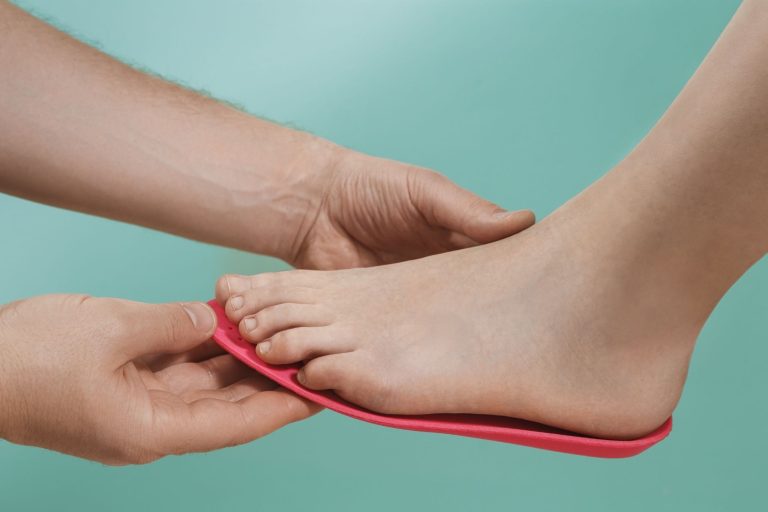
Flat feet are a very common condition in children. However, as a parent, it’s perfectly normal not to always be fully aware of the impact of this condition on your child’s health. That’s why we asked podiatrist Dr Frédéric Gremillet for his opinion on the subject. His advice will reassure parents who have questions about the issue.
What is flatfoot?
It’s a problem where the foot sags. Here we’re talking about flatfoot in children, but it’s a condition that affects the whole population.
There are two types of flatfoot: structural and functional. Simply put, structural flatfoot is when there is a problem with the arch of the foot. Functional flatfoot occurs when there is a problem with the biomechanics of the foot (i.e. the way it works).
What are the symptoms of flatfoot in children?
I think the first thing to mention is discomfort. A child with flat feet will tire his feet and legs more quickly. You’ll notice this when it’s time to exercise, for example.
Sometimes the child may also suffer from pain in the feet, ankles, heels, knees and even the back. In cases like these, the child is often referred to us by an osteopath, chiropractor or doctor for further treatment.
Is flatfoot a common condition in children?
No. In fact, the most common condition is when the foot sags (functional flatfoot). This is most noticeable when a child moves the foot inwards when walking.
As the arch of the foot develops from birth until around the age of 5 or 6, this is quite common. If there’s a malfunction in the foot, that’s where he’ll be inclined to collapse.
I would add that this is why we want to treat the child as soon as possible. The earlier we can help him to treat his condition, the better the chances of a good outcome.
What are the causes of flatfoot in children?
First of all, there is no single gene that causes flatfoot. It is mainly due to the hereditary baggage passed on by the parents.
For example, if the father or mother suffers from foot drop, there’s a good chance that the child will too.
Don’t forget that children often inherit the same type of legs and feet as their parents. So it’s normal for them to ‘follow in their parents’ footsteps’, if I can put it that way.
Are there any long-term consequences for a child with flat feet?
There are always certain risks, unfortunately. For example, there’s a risk of developing malformations (bunions on the feet, hammertoes, etc.).
There’s also all the pain in the heels, legs, knees and sometimes even the back that he experiences as he grows.
Can these foot problems be resolved?
That’s a question I’m often asked! Of course, if the child’s condition is detected quickly, there’s always something that can be done.
For example, there are foot orthoses or exercises that can help. These are options that can help your child strengthen his muscles and even the structure of his foot. We mustn’t get discouraged and look for solutions from the right resources.
Are some children more at risk of developing flatfoot?
It’s true that the chances are higher for a child whose parents already suffer from this condition.
However, leaving aside the factor of hereditary baggage, one child is no more at risk than another of developing the problem. It has nothing to do, for example, with how overweight or active the child is. However, I like to say that it’s a case-by-case basis. Every child is different and so are their feet.
Are there any treatments to relieve flat feet in children?
IWearing a foot orthotic is certainly an option that I often suggest, as it gives good results.
I would also add that the sooner the podiatrist is able to intervene, the better the chance of helping the child. I personally treat children as young as 18 months. If a parent is in any doubt, it’s always best to consult a specialist to get the facts straight.
How can the podiatrist help the child during treatment?
Firstly, there is always an assessment of the biomechanics of the child’s foot. We then either suggest exercises to be done or the wearing of a foot orthosis, and sometimes both, when required.
It’s also important to mention that we follow up with the child on a regular basis (every 6 or 12 months) to ensure that he or she is doing well and adapting to the treatment.
In conclusion, what does a podiatrist bring to the table from a specialist point of view?
I’d say that he’s able to assess the child’s condition, but from an exclusively podiatric point of view. Thanks to his ‘science of the foot’, he can go further and understand the reasons why the child feels certain pains or has difficulty doing physical exercise.
It is this knowledge that enables us to work closely with a number of paediatricians. Together, we carry out a complete assessment of the child.