
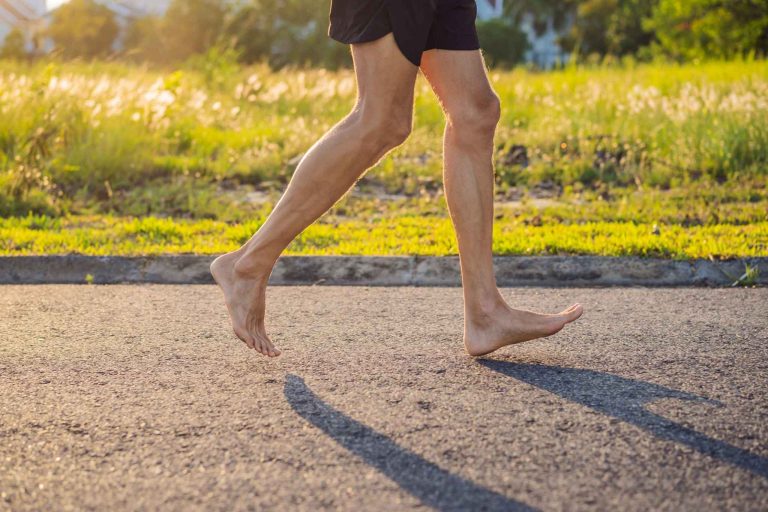
Minimalist or barefoot running is not for everyone. It requires specific training and physiological predispositions that are favourable to the sport. Like all sports, running must be practised with certain measures and precautions to avoid developing injuries. Discover the recommendations of foot health professionals who take a look at minimalist running and barefoot running.
What is minimalist running and barefoot running?
Minimalist shoes provide minimal support for the feet and generate biomechanical behaviours similar to barefoot running. The very thin leather sole protects the feet against lacerations from the ground. Although there are several models on the market, minimalist shoes are generally very light and flexible. Minimalist running differs from barefoot running, in which runners have no foot support or protective soles.
What are the risks of minimalist and barefoot running?
Barefoot or minimalist running puts more strain on the forefoot and calf muscle than conventional running, which put more strain on the heels and knees. Under certain circumstances, athletes are more likely to develop knee injuries during conventional running. In specific cases, minimalist running can be a beneficial treatment for lower-limb injuries. For personalised recommendations, it is advisable to consult a podiatrist. He or she will be able to help athletes with a history of injury or who are experiencing new pain. The recommendations will prevent them from using inappropriate techniques that could lead to overloading the forefoot and even prevent injuries such as achilles tendonitis or stress fractures.
Is minimalist running recommended?
There are several theories about the benefits of minimalist running or barefoot running. From a podiatric point of view, these practices are good in themselves, but they require certain precautions to avoid lower-limb injuries. To be at their best, runners need to adopt appropriate techniques and undergo specific training involving the transition from maximalist shoes to barefoot running.
Consulting a podiatrist will help you understand these sports and the risks involved.
Which belief is most widespread?
Some people advocate minimalist running as a treatment. You should not subscribe to this belief that barefoot or minimalist running is a miracle solution to lower-limb injuries. Such a condition requires assessment by a health professional who is qualified to draw up a treatment plan.
Why can’t everyone do minimalist running?
Minimalist running is not suitable for all runners, as each case is unique. Certain criteria such as morphology, the athlete’s profile and medical history must be taken into account before practising minimalist running. What’s more, runners who take up this sport must show great discipline during their gradual practice. It’s not a sport to be taken lightly, as it can take up to a year of training before you’re running at your best over long distances.
What factors favour barefoot running?
Some body types are more suited to barefoot running and others less so. People with stiffer feet will find it harder to adapt to running barefoot. In all cases, it’s important for runners to listen to their bodies to find out whether they react well to running or, on the contrary, whether they experience any pain. If they notice any new pain or inflammation, they should consult a podiatrist.
In addition, runners must have the muscular capacity to allow their muscles to work well and function efficiently, thereby reducing the risk of injury.
Is a transition period to minimalist running necessary?
A transition period is essential for proper practice of this discipline, to get the body and musculature used to a new effect. The adaptation period varies for each person and can generally last from 6 to 12 months. During this evolutionary period, the runner must adopt different techniques. They should alternate the minimalist shoe with their previous shoes. They can reduce the height of the heel by switching from a high, cushioned sole to the thin sole of the minimalist shoe. This gradual training will benefit him and allow him to run barefoot in complete safety.
Why consult a podiatrist before starting minimalist running?
The podiatrist will guide the runner through the process in order to avoid the risk of injury and achieve optimum performance. He will carry out a personalised assessment by analysing the morphology of the feet, motor control, biomechanics and so on. The podiatrist will be able to provide the runner with the following information:
- Determine whether minimalist or barefoot running is right for them
- Setting expectations and achieving goals
- Knowing how to run barefoot or with minimalist shoes
- Understanding and making the transition
- Ensuring quality follow-up
- Run safely and optimally
- Understand running and your body
If you would like professional advice before taking up this sport, please consult a podiatrist. He or she will be able to provide you with objective support and advice.