
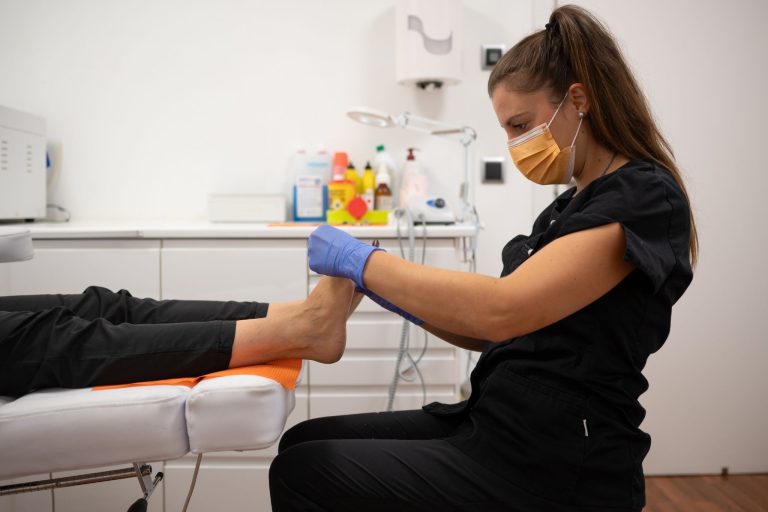
Forefoot surgery is a treatment for conditions such as hallux valgus. When patients experience pain or limitations that affect their quality of life, forefoot surgery becomes a possible solution. In fact, this treatment can be accompanied by foot orthoses, the beneficial effects of which will be felt both before and after surgery.
What questions should a patient ask before forefoot surgery?
Before considering forefoot surgery, patients should first ask themselves what is causing the condition. It is advisable to consult a podiatrist, who will carry out a full biomechanical examination to get to the root of the problem. The podiatrist will then be able to explain which biomechanical factors are responsible for the deformity in the forefoot. If possible, he or she will recommend orthotic treatment before surgery to treat disconfort or pain. In all cases, the patient will be better equipped to understand and make an informed decision about the treatments proposed to remedy a forefoot problem.
What are the main causes of forefoot deformity?
Most forefoot deformities result from instability in relation to their function. The patient’s feet may be deformed as a result of one or more instability factors, such as
- the initial positioning of the feet
- the biomechanical alignment of the axes of movement;
- the causative environment, such as the type of shoe and the surface on which they walk;
- the frequency and number of consecutive hours of weightbearing activities.
Why are foot orthoses recommended before and after surgery?
Patients with a bony deformity, such as hallux valgus, will have better results if their gait is normalised by wearing foot orthotics before surgery, it may prevent the need for surgery or postpone it if the pain is resolved. If movement is impaired, foot orthoses will compensate for the strain on the forefoot. The patient’s gait will then be more appropriate and the deformity can be better prevented.
What is involved in wearing foot orthoses after forefoot surgery?
Most forefoot surgeries are caused by inadequate biomechanics, such as hallux valgus. Following forefoot surgery, the podiatrist may modify previous foot orthoses or prescribe new ones to control the axes of movement of the feet. As the structure of the foot will have changed following surgery, the feet and orthoses should be reassessed by the podiatrist.
Is wearing orthoses a way of preventing forefoot surgery?
If orthoses are prescribed at a young age, it may be possible to avoid or postpone certain foot surgeries required to correct biomechanical deformities such as hallux valgus, hammertoe, etc. In reality, many patients with a biomechanical problem will have to wear orthoses, despite forefoot surgery. Some will opt to wear plantar orthoses without undergoing surgery. It is advisable to consult a podiatrist to choose the best solution for your needs.