
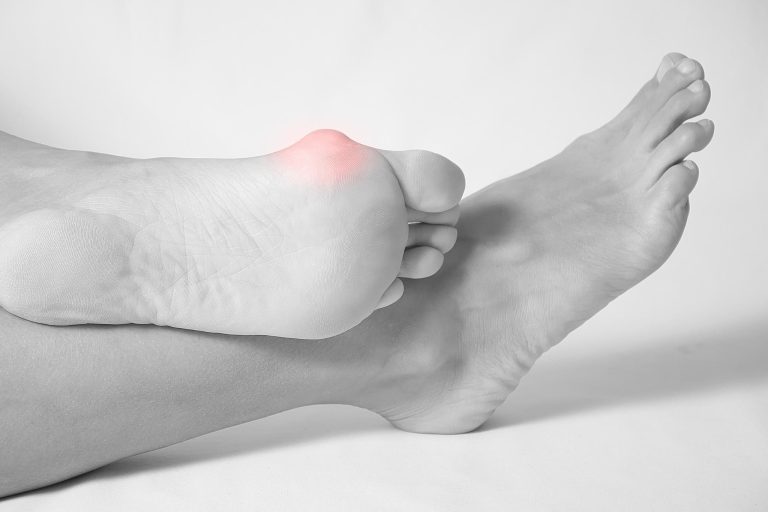
The bunion in the foot, known under the medical term hallux valgus, results from a bony deviation of the first metatarsal related to a biomechanical weakness. The bunion causes the big toe to deviate towards the other toes, resulting in intra-articular stretching and long-term pain. People suffering from hallux valgus can use various podiatric treatments to improve their condition.
What are the disadvantages of a bunion?
This bony deformity creates an external bump on the foot and leads to occasional or permanent pain, depending on the patient. In addition to overheating and intra-articular throbbing, a bunion can cause side effects such as corns on the second toe. From an aesthetic point of view, hallux valgus can make it difficult for some people to wear shoes.
Hallux valgus more common in women
The majority of hallux valgus sufferers are women. In the long term, wearing more stylish and narrow shoes is a factor that can lead to this bone deformity. Foot bunions are more likely to develop during the menopause, as hormonal changes accentuate bone deviation in some women. Hereditary predispositions can also cause bunions due to biomechanical weakness and foot anatomy.
Consult a podiatrist to find out the source of the problem
This foot health professional will take the time needed to diagnose the source of your pain. By consulting a podiatrist, you’ll benefit from sound advice on how to deal with bunions. At the consultation, he or she will carry out a postural analysis and a complete biomechanical examination to pinpoint the real source of the problem. He will then recommend the best treatment for you.
Treatment options for bunions
There are two types of treatment for this problem.
The most conservative treatment recommended for bunions is the wearing of orthoses. These control the pain and symptoms of hallux valgus, as well as slowing its progression over time. Before prescribing foot orthoses, the podiatrist carries out a postural analysis and manipulates the foot to determine its mobility. If orthoses are necessary, a mould will be made and a made-to-measure product designed. This treatment is highly effective and requires only a slight adjustment, lasting from one to three weeks.
In some cases, bone surgery may also be considered. This requires an operation on the foot to correct the deviation caused by the bunion. Foot orthoses must then be worn for the long term.
Long-term effectiveness of plantar orthoses for hallux valgus
Bunions on the feet make walking less comfortable and cause constant irritation or severe pain. A foot orthotic distributes the weight under the foot to relieve pressure on the joint. As soon as you start using it, you’ll feel more comfortable and have greater endurance, especially when walking. Over time, wearing orthotics will reduce the frequency of pain.
Tips for alleviating pain
- Choose comfortable shoes that are the right width for your feet. This will reduce external rubbing pain.
- If necessary, try the protectors available from chemists to cushion the bunion bump. There are various gel products that reduce pressure under the foot.
- Avoid walking barefoot, as the affected foot needs support.
Consult a podiatrist for advice on the treatments available and ways of relieving the pain caused by hallux valgus.