FAQ

Cryos Dynamic Orthotics are a prescription only device and thus cannot be ordered directly from the laboratory. 

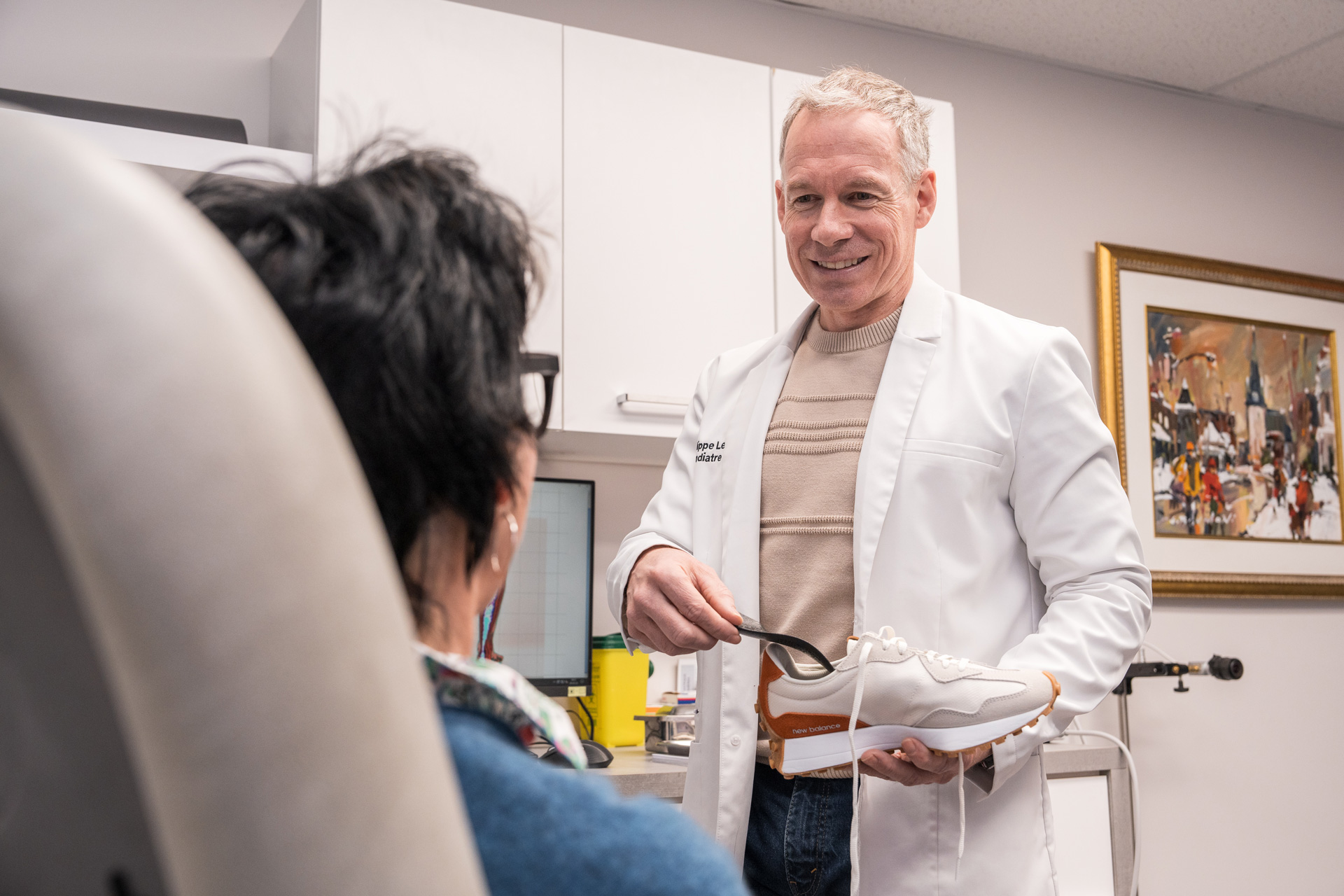
You must consult a podiatrist for a diagnosis and prescription of the appropriate orthotics for you. We invite you to consult the FIND A CLINIC page to a podiatrist nearest you who prescribes Cryos Dynamic Orthotics. 

Your podiatrist will be able to answer your questions and guide you towards the best solution for the health of your feet. By discussing your concerns and expectations with your professional, you’ll be able to better understand the benefits of orthotics and how your treatment will progress in the short and long term. 

As the feet are at the very foundation of the body, they may be the source of a postural problem, or an adaptation or reaction to it. The podiatrist will draw up a treatment plan to remedy the pain caused by a postural or biomechanical anomaly. When a problem persists, the podiatrist may also be called upon to contribute to the treatment prescribed by another health professional. Their expertise then becomes a complement that maximises results and recovery.  

Conversely, if the podiatrist deems it necessary, he or she may recommend that the patient consult a physiotherapist, osteopath, chiropractor, massage therapist and so on. The podiatrist’s aim is to heal problems at their source while improving patients’ quality of life.  

  • Intrinsic orthotics (ie the hard plastic shell without any top cover material), can be cleaned with lukewarm water and mild soap. Do not use strong cleaning products. 
  • If your orthotic is covered in a material, it is not advisable to clean it with cleaning products; use a damp cloth instead. If the covering is suede, use a suede brush. 
  • Do not expose your orthotics to a source of heat such as the sun, a heating system, etc. 

The lifespan of Cryos orthotics varies from 2 to 5 years for an adult and 12 to 24 months for a child, depending on growth. The underlying geometry of your feet may change however during your orthotic treatment and so your podiatrist may recommend that you change your orthotics sooner to maintain an optimum fit and treatment. 

Yes, you may feel a little sore when you start wearing your orthotics. Your body will gradually adapt to the work they do. If you follow your podiatrist’s advice for the first few weeks of treatment, you should not experience any major discomfort. For more details, see our blog post on the steps involved in wearing orthotics.

Specialists do not always agree on the balance between movement and immobility. For almost a century, the conventional ideology for correcting foot dysfunction and postural discomfort was based on immobilising the foot in an “ideal” corrective position. However, by immobilising the foot, the healthy, dynamic movements of the foot may also be limited, resulting in an uncomfortable device and sub-optimal treatment. 

At Cryos, we believe that movement is essential to an active life. The Cryos Dynamic Orthotic stimulates and guides the foot towards its natural movement to keep it muscles active. 

Your orthotics can accompany you in all your activities. You can even have a pair of orthotics specially moulded for your ski boots, skates, etc. Read about the importance of wearing your orthotics during sports on our blog. 

Damaged orthotics can be repaired depending on the severity of the damage. Scratches, animal bites and surface damage can usually be repaired. If your orthotics need to be replaced, your podiatrist may have to redo your scans and send a new prescription to the orthotic laboratory. For any repairs or modifications, you must consult your podiatrist. 

A pressure mat is a fantastic tool to help your podiatrist assess your overall foot and postural health. It is however, lacking the depth data and is thus fundamentally different from a 3D scan and cannot determine the unique 3D geometry of your foot. 

A precise 3D scan captures the full shape of YOUR foot and allows a 100% custom orthotic to be created that is both effective AND comfortable.  

The Foot Suspension System (FSS3D) is a revolution in foot scanning. It helps your podiatrist to position your foot reliably into the ideal position for capture by the 3D scanner. Without a positioning aid, it may be difficult to achieve the ideal position and result in a sub-optimal orthotic that is less comfortable and less effective. 

In some regions such as Ontario, foot care professionals may use the title chiropodist or podiatrist. This distinction stems from local historical regulations.

While scope of practice and training can vary, both are highly qualified professionals specialized in foot health. On our site, we use the term podiatrist as a general reference to all qualified professionals using our technology, regardless of their official title in their province, country, or region.